5 Jan 2026
Tow-truck lamps – what lighting is legally required and how to choose it?
Proper trailer lighting is one of the most important components of any transport setup. The quality, placement, and selection of lights directly affect both driving safety and compliance with regulations. For tow-trucks — especially those used to transport vehicles, machinery, or specialist equipment — the lighting system must operate reliably in every situation, regardless of weather conditions, time of day, or load. Learn which tow-truck lights are essential, how to choose them, and what to remember during installation.
Types of lighting used on tow-trucks
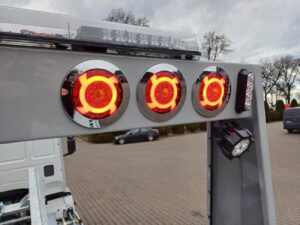
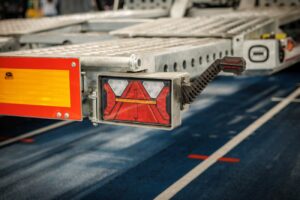
Modern trailers use a wide range of light sources, each serving a specific function. The core is made up of rear tow-truck lights, responsible for tail lights, turn signals, brake lights, and license plate illumination. This key set is crucial for transmitting signals to drivers behind, allowing them to properly assess the situation on the road. Today, LED lights dominate this group due to their long lifespan and resistance to vibration.
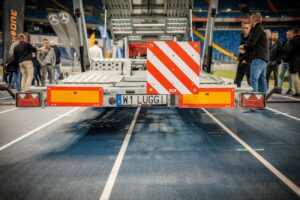
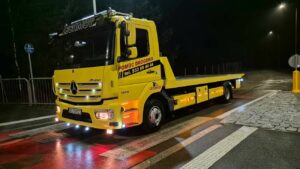
An important part of the lighting setup is marker lights (position lights) that define the trailer’s dimensions and help assess its width and length in the dark. On larger trailers, both side marker lights and front/rear lights mounted on extensions are used. Their purpose is to improve visibility of the entire setup from different directions — especially important during night work or in conditions of reduced visibility.
In tow-trucks with a gross vehicle weight over 750 kg, reversing lights are also mandatory. These make maneuvering easier and inform other drivers about reversing actions. In practice, work lights are also used — powerful, directed light sources that illuminate the ramps, platform, or area around the trailer.
Increasingly, LED trailer lights are used to serve as daytime running lights, rear fog lights, or additional signals used on road assistance vehicles. All these elements create a complete and coherent lighting system that provides maximum visibility and safety even in the most demanding conditions.
Why trailer lighting is critical for safety?
A tow-truck — even when transporting a vehicle with its own lights — is treated as a separate unit and must be visible in all conditions. That’s why good trailer lighting is fundamental for road safety. The right light intensity and color ensure that the signals sent by the driver are clear to other road users — especially brake lights, turn signals, and position lights.
In emergency situations on motorways or expressways, a tow-truck often operates amid heavy traffic. Lights that are too weak, damaged, or improperly chosen increase the risk of collisions by limiting other drivers’ reaction time. For this reason, modern LED trailer lights have become a standard — their design resists vibration and maintains stable illumination even when the trailer travels on uneven surfaces or carries a heavy load. High-quality lighting also improves comfort when maneuvering the setup at night or in poorly lit areas.
How to choose the right lighting for a trailer?
Choosing the right lighting set should begin with analyzing the trailer’s width, length, purpose, and expected load. For small, lightweight trailers, standard combined lamps are sufficient, while large trailers intended for intensive use require a more advanced set — including marker lights, side position lights, and powerful reversing lamps.
Pay attention to the type of light sources used. In modern fleets, LED tow-truck lights are dominant — they work long and maintenance-free, provide fast ignition, and deliver uniform light output. It’s worth choosing products with a minimum IP 65 waterproof rating, and in harsh conditions — IP 68, which provides protection against water, dust, and mud thrown up by wheels.
Compatibility with the electrical system of the trailer is also crucial. Most LED lamps are suitable for both 12 V and 24 V installations, allowing them to be used on trailers towed by cars and light commercial vehicles. When choosing trailer lighting, consider wire length, connector type, and mounting options. Available models include recessed lights, bolt-on lights, and frame-integrated lights — correct selection speeds up installation and improves the final look. Energy efficiency and design are also important, especially for those who care about the company’s image.
Trailer lighting and regulations – what must be included in every setup?
Current regulations define which lights must be present on every tow-truck. According to them, a trailer must have:
- rear position lights,
- brake lights,
- turn signals,
- warning lights,
- license plate lamps,
- rear fog lights,
- rear reflectors (triangles),
- Front and side reflectors.
Detailed requirements depend on the dimensions of the tow-truck. If the trailer’s width exceeds 1.6 m, front position lights are required to mark the outer edges for oncoming traffic. For tow-trucks with a gross vehicle weight over 750 kg, a reversing light becomes mandatory — very important when maneuvering in loading yards, parking lots, or low-visibility areas.
For tow-trucks longer than 6 m, the law requires side position lights so other drivers can assess the length of the setup, especially after dark. Additional requirements also apply to trailers wider than 2.1 m — in such cases, front and rear marker lights become obligatory. Regardless of configuration, all lamps must be homologated, have proper optics, and be positioned so their light is visible from the required distance. Correctly designed trailer lighting not only meets standards but also substantially improves transport safety.
Remembering these rules is especially important for those upgrading older tow-trucks or replacing traditional lights with modern LED trailer lights. Using lamps designed solely for off-road use may result in a fine or even temporary confiscation of the towing vehicle’s registration certificate.
Common mistakes when installing trailer lights
One of the most frequent mistakes is mixing different types of lamps — for example, using LED lights alongside traditional bulb lamps. Differences in power consumption can cause turn signal malfunctions or errors detected by the towing vehicle’s computer.:
- incorrect electrical connections,
- using inappropriate connectors,
- lack of proper sealing of wires.
A wiring installation exposed to moisture quickly corrodes, leading to failures and sudden light outages.
Another mistake is incorrect light placement. Tail lights mounted too low may be obscured when the trailer is heavily loaded, and poorly positioned marker lights can be partially hidden by structural elements. Often, requirements for the distance between lamps, their height above the road, or symmetrical placement are overlooked. These details may seem small, but they affect both safety and compliance with regulations.
Trailer-specific lighting – where to find these products?
HORPOL has long specialized in designing and manufacturing advanced lighting systems for the transport industry. They offer complete rear light clusters, marker modules, turn signals, reversing lights, and work lights designed for tough conditions — enabling a configuration that meets the technical requirements of any trailer, from light trailers to vehicles used around the clock.
The manufacturer also provides full technical support. During the lighting selection process, specialists analyze trailer dimensions, usage, and wiring type, proposing solutions that are optimal in terms of durability and safety. This support is especially valuable for companies involved in vehicle transport, roadside assistance, and fleet operations, which require a uniform, reliable, and long-lasting set of lamps. The result is trailer lighting that meets standards, works reliably, and ensures the highest level of visibility in all conditions.